Certification Details

Certified Project Master-Practitioner – CPMP

Course Preview
Watch Preview

Overview

In the modern landscape of both public and private sectors, the ability to deliver successful projects has become the definitive benchmark for organizational achievement. Enterprises now reach their strategic goals primarily through the lens of effective project management, which requires a precise balance of defined scope, budgetary control, and strict scheduling. However, as global work environments grow more intricate, project leaders are increasingly pressured to produce higher-quality results with fewer resources. To meet these challenges, our programs move beyond simple theoretical definitions of management. Instead, they provide a hands-on, "How To" framework equipped with the specific tools, techniques, and processes necessary to navigate and implement successful initiatives in today’s demanding professional world.

The Certified Project Master-Practitioner – CPMP™ certification offers a comprehensive suite of modules designed to master the entire project lifecycle, from initial planning and execution to rigorous control and final completion. By focusing on the latest industry trends and the evolving expectations placed on modern leaders, the CPMP™ provides the expertise needed to develop sophisticated project schedules, establish performance measures, and apply effective control mechanisms. Furthermore, the curriculum places a heavy emphasis on the human element of leadership, teaching candidates how to build, guide, and inspire high-performing project teams to reach their full potential.

Earning the CPMP™ designation serves as an independent, third-party validation that a professional has met the high standards of knowledge and experience recognized across the global business community. It acts as a public testament to the time, energy, and dedication an individual has invested in the project management craft. This overt evidence of professional commitment often acts as a catalyst for career advancement within the corporate domain, paving the way for increased responsibilities, higher-level roles, and significant growth in earning potential.

TWhile many practitioners acquire their skills through years of on-the-job experience, the formal structure of the CPMP™ body of knowledge ensures a more complete assimilation of advanced techniques and modern methodologies. By obtaining this respected appellation, professionals do more than just update their resumes; they significantly boost their own self-confidence and secure the lasting respect and recognition of their peers. It is a transformative step for any leader looking to solidify their reputation as a capable and highly skilled project expert.

Certified Project Master-Practitioner – CPMP is a foundational credential awarded by ITQMA to professionals who have demonstrated core competency in project frameworks.

E-Course Duration: 45 to 50 Hours

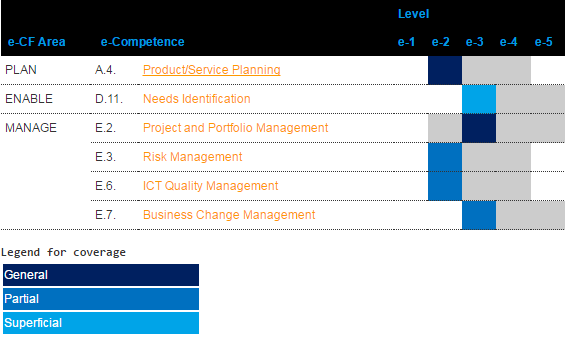
e-Competence Framework (e-CF)

The mapping of this certificate against the e-Competence Framework. To know more on e-Competence Framework (e-CF) visit, ECF


Certified Project Foundationist – CPF Certification

Exam Information

The exam comprises of 150 Multiple Choice Questions out of which the candidate needs to score 70% (105 Correct out of 150 Questions) to pass the exam.

The total duration of the exam is 2 hours (120 Minutes).

  • The exam is conducted in AI-proctored mode and can be taken anytime, anywhere within an eight-month validity period.
  • Upon purchasing the Premium Package or an Exam Voucher Code, a voucher code with two attempts will be assigned to your login profile under the "My Vouchers" tab. You can then take the exam through the "My Exam(s)" tab in your profile. To take the exam, simply apply the voucher code.

  • The Exam Voucher included in the Premium Package or purchased separately is valid for two (2) attempts. If you are unable to pass the exam within these two attempts, you can purchase a new voucher code, which will grant you an additional two attempts.
  • Kindly Note: The voucher will not be valid for a second attempt if you pass the exam on your first attempt.

  • The validity period of Certified Project Master-Practitioner – CPMP™ Certificate is for five (5) years, the candidate needs to either retake the exam or can complete the E-Course for CPMP to accrue the number of continuing education units (CEUs) to renew the Certificate. Renewing the certificate will allow the candidate to retain the professional stature and credentials intact.
  • Certificates must be renewed on or before the expiration date (when they become inactive) to be current.

CPMP™ is a Trademark of ITQMA

Note: The Certified Project Master-Practitioner – CPMP Certification requires a mandatory E-Course completion requirement.

Note: Maximum number of questions are drawn from the E-Course in the actual exam.

Course Outline

Module 1 – Project Management Fundamentals

  • Defining a project and project management
  • How projects can benefit you and your organization
  • Project life cycles
  • Selling your own project ideas
  • Role & skills of the project manager
  • Creating a vision
  • Setting project goals
  • Project planning worksheets
  • The statement of work

Module 2 – Project Management Training

  • What a project is
  • Project management basics
  • How projects can help you
  • A project’s life cycle
  • Selling and preparing a project
  • The role of a project manager
  • Project goals
  • Laying out a project
  • Project risks and contingency planning
  • The work breakdown structure
  • Planning tools and budgets
  • Teamwork and development
  • Communication
  • Closing out a project
  • Team meetings
  • Project presentations

Module 3 – Intermediate Project Management

  • What really needs to be done?
  • Scheduling your project
  • The Work Breakdown Structure and other planning tools
  • Budgeting
  • Project risks
  • Schedule and budget compression
  • Change control process
  • Closing out a project

Module 4 – Effective Planning & Scheduling

  • Projects and schedules
  • The Work Breakdown Structure (WBS)
  • Estimating activity durations
  • Identifying task dependencies
  • Aligning resources with activities
  • Project planning
  • Scheduling software
  • Uncertainty and risk management
  • Communication
  • Creating a viable schedule
  • Updating and monitoring the schedule

Module 5 – Advanced Project Management

  • Choosing the Project Team
  • Scheduling Your Project
  • Building a Winning Team
  • Team meetings
  • Nine Easy Ways to Reward Your Team
  • Developing a Communication Plan
  • Communicating with Sponsors and Executives
  • Dealing with Problem Team Members

Module 6 – Team Building

  • Types of teams
  • The TORI model
  • The Team Player Survey
  • Organizations Today
  • The Stages of Team Development
  • Communication Skills
  • Shared Leadership
  • DeBono’s Thinking Hats
  • Managing Team Conflict
  • The Trust/Relationship Model
  • Obtaining Consensus
  • Team-Shaping Factors
  • Team Problem-Solving
  • SWOT Analysis

Module 7 – Building Better Teams

  • Defining teams
  • Establishing team norms
  • Working as a team
  • Your team player type
  • Building team trust
  • The stages of team development
  • Team building with TORI
  • Communication
  • Becoming a good team player

Module 8 – Risk Management

  • Understanding risk
  • Risk management activities
  • Assessing risk
  • Responding to risks
  • Resourcing controls
  • Reaction planning
  • Reporting and monitoring
  • Communication
  • Reviewing and evaluating the framework

Module 9 – Crisis Management

  • What is crisis management?
  • Training leaders and staff
  • Conducting the crisis audit
  • Performing a risk level analysis
  • Developing a response process
  • Consulting with the experts
  • Incident management techniques
  • Working through the issues
  • Establishing an emergency operations center
  • Building business continuity and recovery
  • Recovering and moving on
  • Plenty of case studies

Module 10 – Time Management

  • The Power of a Change
  • Changing Our Perspective
  • Setting Goals
  • Planning Tips and Tricks
  • Setting a Routine
  • Doing it Right
  • Putting an End to Procrastination
  • Getting Organized
  • Organizing Your Files
  • Managing Your Workload

Module 11 – Leadership Skills

  • Managing your time and energy
  • What makes a good leader?
  • Communication as a leadership tool
  • The commitment curve
  • Employee development models
  • Dealing with conflict and difficult issues
  • What successful leaders do

Module 12 – Self-Leadership

  • What is self-leadership?
  • Knowing who you are
  • Change management
  • Knowing what you do
  • Motivation for optimists
  • Using what you know

Module 13 – Communication Strategies

  • Creating positive relationships
  • Growing our self-awareness
  • Communication basics and barriers
  • Asking questions and listening skills
  • Body language
  • Communication styles
  • Creating a positive self-image
  • Frame of reference
  • Techniques for the workplace
  • Assertiveness

Module 14 – Knowledge Management

  • Definitions of knowledge management, tacit knowledge, explicit knowledge, and KMBOK
  • The business case for knowledge management
  • (WBS)
  • The knowledge management mix
  • The knowledge management framework
  • Knowledge management models
  • The knowledge management toolkit
  • Implementing knowledge management initiatives
  • Designing a chief knowledge officer position
  • Case studies and success stories

Target Audience


Program managers, project managers, HR Managers, Business Managers, Marketing Managers, Entrepreneurs and project leaders with at least two (2) years of experience managing project teams

Certified Project Master-Practitioner – CPMP are trademarks of ITQMA (IT Quality Management Association). All rights reserved.